
Communication is an essential part of everyday life. It allows us to connect with others, express our needs, make decisions and participate in the world around us. But as we move through different stages of life, the demands placed on our communication skills change.
For adolescents and adults living with developmental differences or lifelong neurological conditions, navigating these changes can present additional challenges. Understanding how communication needs evolve, and recognising when additional support may be beneficial, can make a meaningful difference to confidence, independence and quality of life.
How communication demands change throughout adulthood
Communication involves much more than speaking clearly. It includes understanding information, interpreting social situations, expressing thoughts and emotions, and advocating for our own needs.
As young people transition into adulthood, they encounter increasingly complex communication demands. These might include:
- Education and employment: Understanding detailed instructions, participating in discussions, communicating with colleagues and managing workplace expectations.
- Relationships and social connections: Navigating conversations, interpreting social cues, managing misunderstandings and building meaningful relationships.
- Independence and everyday decisions: Making appointments, managing personal responsibilities, communicating with healthcare professionals and understanding important information.
- Community participation: Engaging in group activities, interacting with unfamiliar people and confidently expressing preferences or concerns.
For someone with a lifelong communication difficulty, skills that were effective during childhood may not always meet the demands of adult life.
Importantly, this doesn’t necessarily mean their communication abilities have declined. Often, it is the environment, expectations and complexity of interactions that have changed.
The importance of social communication and self-advocacy
Being able to communicate effectively is closely linked to independence and participation.
Social communication involves understanding the unwritten rules of conversation, recognising different perspectives and adapting communication to suit different situations.
For people with developmental differences, including autism and intellectual disability, some aspects of social communication may require additional support. This can become particularly relevant when entering employment, developing relationships or navigating new social environments.
Equally important is self-advocacy – the ability to express personal needs, make informed choices, ask questions and communicate when something isn’t working.
Supporting these skills can help individuals participate more actively in decisions about their healthcare, education, employment and everyday lives.
The goal is not to change someone’s personality or natural communication style, but to provide practical strategies and support that help them communicate in ways that are meaningful and effective for them.
Communication support isn't just for childhood
There is sometimes an assumption that communication therapy is primarily for children, or that communication skills become fixed once someone reaches adulthood.
In reality, communication can continue to develop throughout life, and new challenges or opportunities can create a need for different strategies.
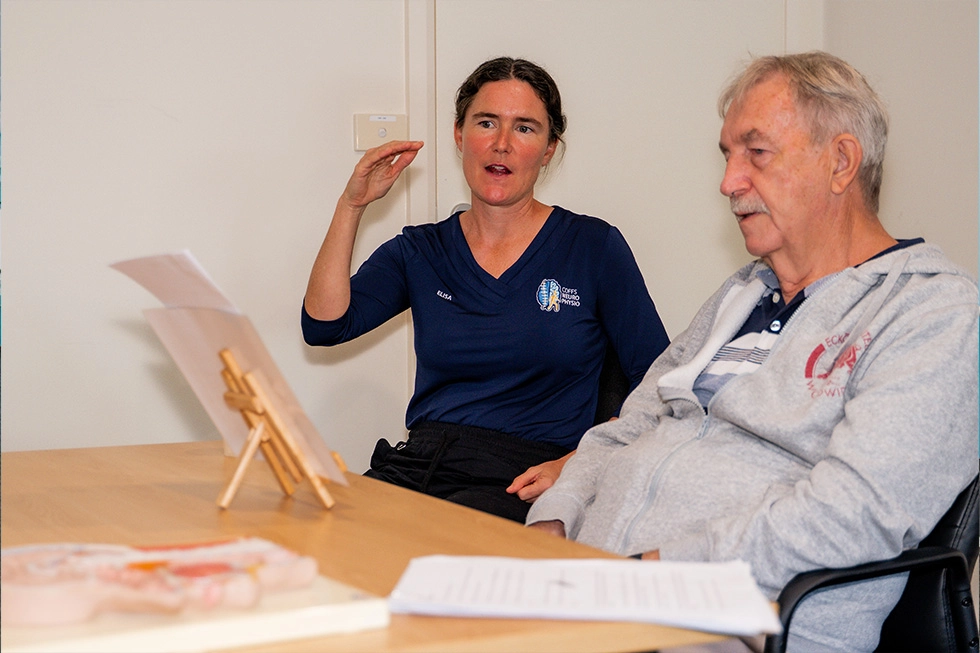
Speech Pathology can help adolescents and adults develop practical communication skills relevant to their current circumstances and personal goals. This may involve strategies for managing conversations, understanding complex information, expressing needs or building confidence in unfamiliar situations.
For adults living with neurological conditions such as stroke, brain injury, Parkinson’s disease or multiple sclerosis, communication needs may also change over time due to the effects of their condition.
In either situation, therapy should be individualised, focusing on what matters most to the person and how they want to participate in everyday life.
Supporting communication at every stage of life
At Coffs Neuro Physio, we recognise that communication needs are as individual as the people experiencing them.
Our Speech Pathology services support adolescents and adults with developmental differences, alongside adults living with neurological conditions that affect communication.
We take a personalised, practical approach, considering not only communication abilities but also the environments, relationships and everyday activities in which those skills are used.
Whether someone is preparing to enter the workforce, navigating new responsibilities, maintaining relationships or adapting to changes associated with a neurological condition, the right communication support can help promote confidence, independence and meaningful participation.
Communication needs don’t remain the same throughout life – and the support available shouldn’t have to either.
To learn more about Speech Pathology at Coffs Neuro Physio, visit our Speech Pathology services page or contact our friendly team on (02) 5642 4092.